Love letters from the war
Love Letters from the War explores how war continues to echo through memory and emotional legacy — not through visible violence, but through the quiet struggle to remain human. The project is based on nearly one thousand field letters my German grandfather Karl wrote to my grandmother between 1943 and 1945.
In these letters, I expected to find fear, violence, and hardship, but instead I found tenderness and the will to hold on to love and dignity in times of moral collapse. This project offers an intimate glimpse into the inner world of an ordinary man. He was not a hero in any conventional sense, nor did he perform grand gestures or make history. His actions were small and humble – writing daily letters to his wife, reflecting on fleeting moments of beauty, and staying connected to what truly mattered.
The work combines three visual layers: original letters and documents, archival family photographs from the 1940s, and AI-generated visualizations that imagine moments never photographed but vividly described. Together they form a dialogue between reality and imagination, history and emotion.
Find out more:
Website: hannoketterer.com
Instagram: @hannoketterer
Money State (Labyrinth of reality)
Money State (Labyrinth of reality) is a photo essay that takes the viewer deep into the post-war reality of Sierra Leone. The country’s jungle acts as both a physical and psychological labyrinth, filled with the coexistence of light and darkness, civilization and barbarism. The scars of civil war are still visible: many young people have never fully reintegrated into society, instead struggling with homelessness, violence, fear, exploitation, and corruption. Ebola, COVID-19, and a severe drug crisis have further deepened the vulnerability of society.
The work explores whether life after war can be as unstable as conflict itself. The photographs reveal the paradox of innocence and evil among former child soldiers, highlighting their roles as both victims and forced actors. “Money State” depicts a community born on a landfill, where uncertainty and the longing for togetherness are interwoven.
My project does not document violence directly, but rather investigates the layers of trauma, silence, and hope. Sierra Leone represents a society where crisis is chronic and daily life is filled with profound challenges. The work invites the viewer to confront human survival, despair, and courage—a play between beauty and harshness.
Find out more:
Website: jannekorkko.fi
Instagram: @janne.korkko
Good Luck Around Every Turn
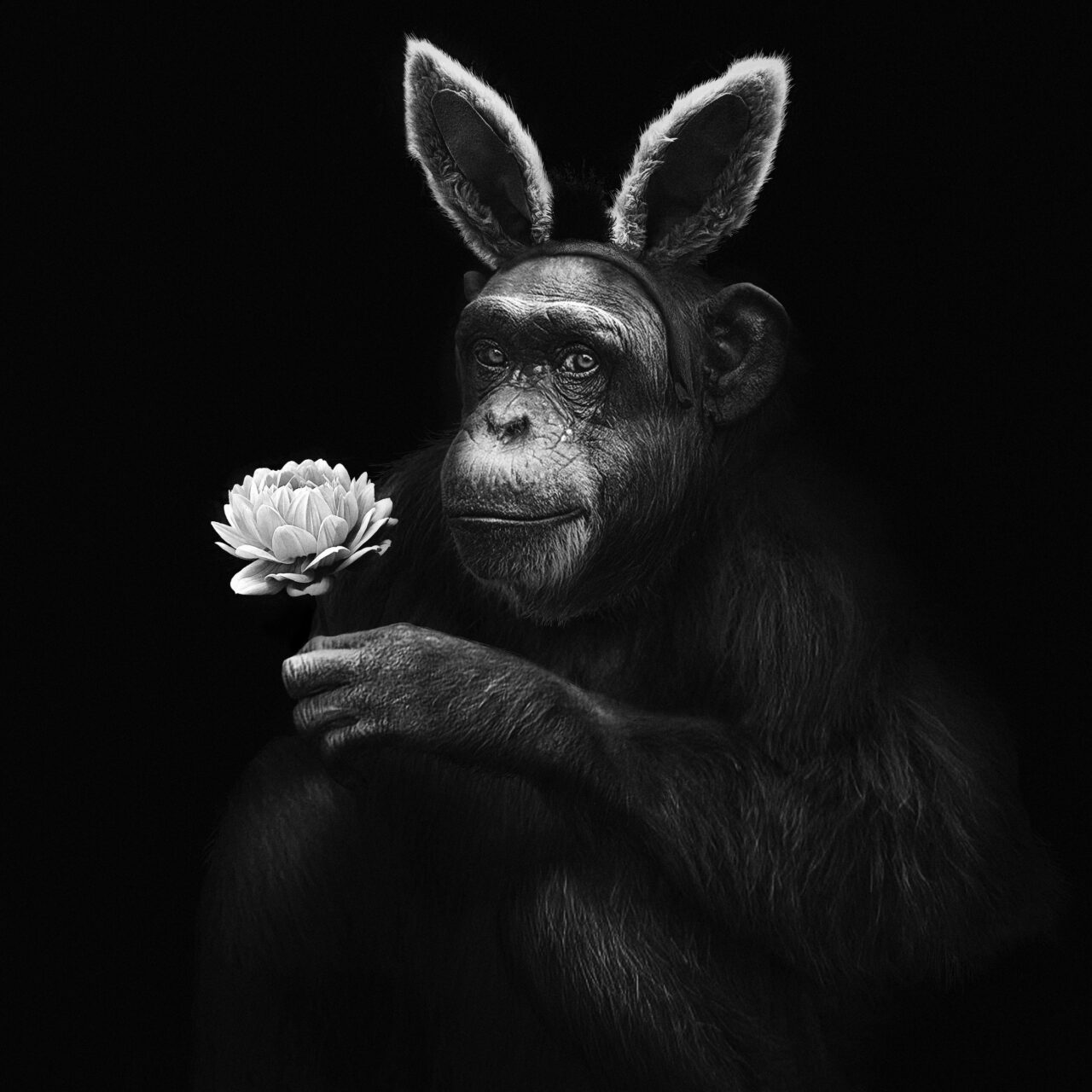
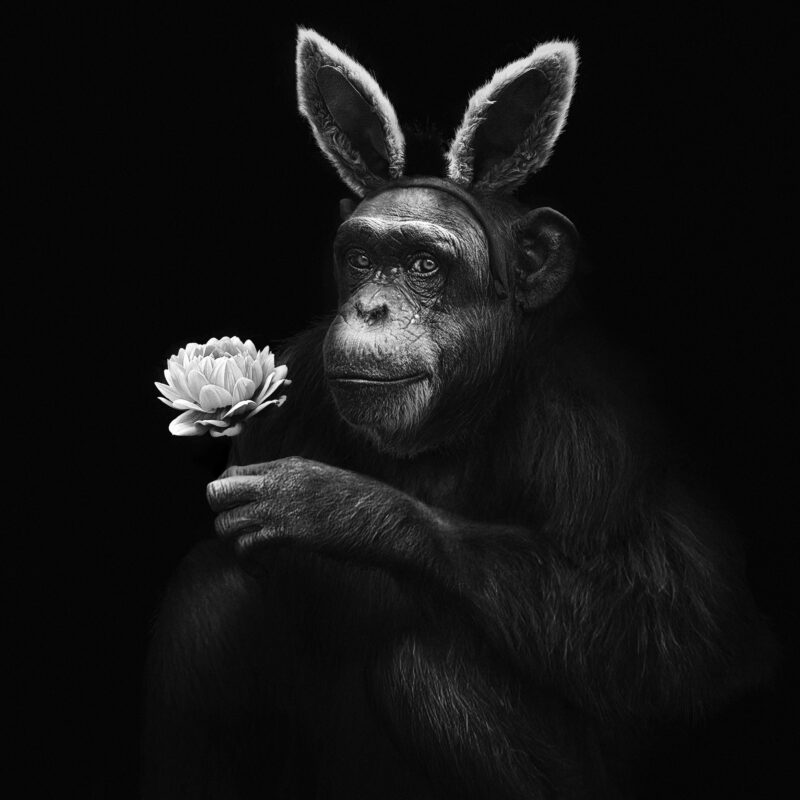
Good luck around every turn is a project about empowerment and self-determination. It captures fragments of my life and how agency and humour persist despite uncertainty and difficulty.
For the past three years, I’ve been documenting the world as I experienced it. I stumbled through life and laughed about it anyway. Either not thinking at all or far too much. The days blurred. A strange dizziness set in, a sense that something wasn’t quite right. Eventually I found out it was caused by a malignant tumour right in the middle of my head. That year became one of many goodbyes, like driving down a road you’ve travelled for years only to realise you’re leaving it behind.
This work becomes my way of holding on, not to control, but to stay present, to show myself that I can still choose how to look at the world. I don’t want to be just a patient or a diagnosis. I want to decide how I move through this, like showing up to radiotherapy in a kangaroo costume just because it makes me laugh. Making these images helped me stay stubborn, ironic, alive.
Good Luck Around Every Turn gathers fragments of life as it unfolds: unfiltered, uncertain. It’s about learning to live with what you can’t change and finding small moments of freedom in the midst of it all. An act of self-determination, and a reminder that even in this mess, I can still find room for humour and tenderness.
Find out more:
Instagram: @norahandsley
Thinking of a place
This work emerges from questions of migration, memory, and belonging shaped by my family’s history and my own fragmented relationship with my place of birth. My paternal grandfather migrated from Sargodha (now in Pakistan) to Allahabad as a 13 year old boy to be a part of the freedom movement in undivided India, never able to return. My mother’s family relocated to Calcutta in 1947 after the partition. What remains of these journeys are only stories, gaps, and silences.
I was born in Allahabad and spent my early childhood there before leaving for boarding school, returning only intermittently over the years. Each return carried a different version of the same city. In 2020, during the lockdown, I came back for an extended period after nearly fifteen years. Confined to the family home, I discovered old photographs and objects that felt like artefacts of lives half-remembered.
As restrictions eased, I began revisiting riversides, playgrounds, homes, and forgotten corners of the city from my childhood. Through this process, I attempt to piece together personal memory with inherited history, tracing what survives, what has shifted, and what has been irrevocably lost.

Find out more:
Website: raghavgoswamy.com
Instagram: @raghavgoswamy
Self-Portraits 2016-2026
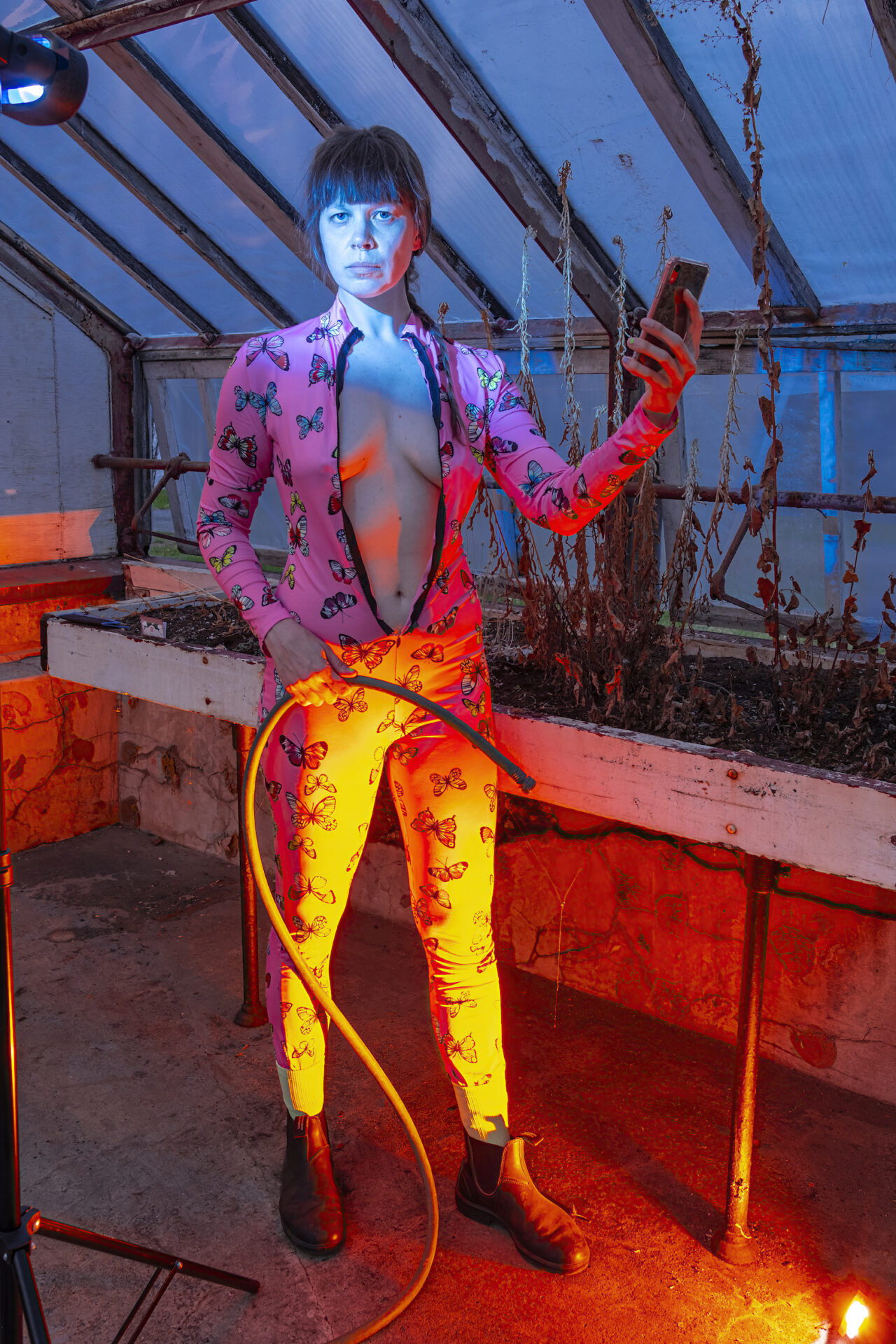
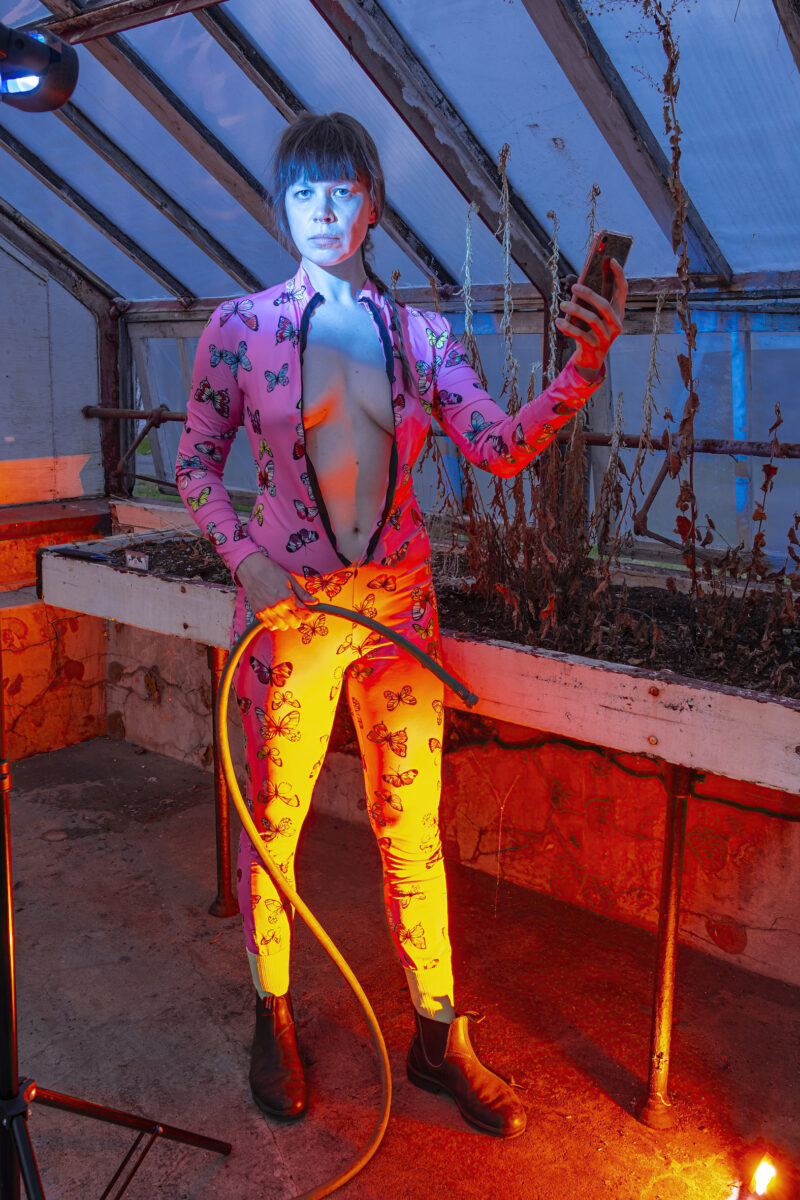
This long-term body of self-portraits began in 2016, following a psychotic episode that fundamentally altered my perception of reality. What started as an attempt to reorient myself after this rupture gradually developed into a sustained body of work — a way to engage with inner conflict not as a singular event, but as an ongoing condition.
Over time, the work has expanded to reflect the different forms this tension has taken, including exposure to violence, heightened sensitivity and existential instability. Rather than unfolding as linear narratives, the images emerge from specific moments of necessity, surfacing through the body, gesture and atmosphere.
Self-portraiture functions here as a site of confrontation rather than representation. The body becomes a terrain where vulnerability and force, intimacy and threat, control and loss of control coexist. The images are constructed intuitively in the moment, using coloured gels, flash, long exposures and other in-camera effects to translate inner tension into physical presence.
Over the years, philosophy and esoteric symbolism entered the work as frameworks for approaching what remains unresolved. Rather than offering explanations, they shape the conditions under which the images are made, allowing the work to remain open, ambiguous and ritualistic.
Find out more:
Website: sarisoininen.com/
Instagram: @sari_soininen
»let’s wait and see how far we get«
In my photographic work, I explore the hopeful yet painful rupture between what was and what is yet to come. The moment just before the after — and after the before, when identity, memory, and perspective collide in an almost unbearable way.
“Pictures generally have a secure place in a frame. The square of the rectangle encloses the defined area and focuses our attention. When pictures leave their frames, this indicates a loss of protective routines and habits.
Based on this idea, Sven Weber stages the departure of his elderly grandparents from their home in the most economical way imaginable as the pictures leave their frames. Three slightly displaced photos are enough for him to quietly hint at the upsetting drama that accompanies old people leaving their own four walls for good and moving into so- called assisted living. They lose the framework that has given them support up to now – ideally to gain a new supporting structure.
However, the frames and the images are still intertwined on a formal level: Alongside the driving energy of new beginnings, the inhibiting forces of inertia also become tangible.”
(Text: Bertram Kaschek, Curator of the State Gallery Stuttgart)
The quotes on the frames were spoken by my grandparents during the move.
»let’s wait and see how far we get.«
»Leave everything as it is, we’ll be back.«
»You young people always imagine it’s so easy — but it’s not.«
Find out more:
Website: svenweber.de
Instagram: @svenweber_photographie
Buska
Buska begins with a botanical journey to the Datu cactus on Curaçao. This columnar plant was used by enslaved people to fence the small plots allocated to them on plantations—living boundaries marking both oppression and survival. Following Datu through the island’s landscape reveals how colonial violence continues to shape the environmental crisis.
In 1915, Royal Dutch Shell built an oil refinery at the island’s heart. Seventy years later, the company sold it for one guilder, evading responsibility for decades of pollution. The Datu witnessed this transformation from plantation economy to industrial sacrifice zone, still standing as colonial boundaries evolved into petrochemical contamination.
Through archival materials and contemporary photography, Buska traces patterns of exploitation across time. The work explores how violence persists not through dramatic events, but through contaminated landscapes and communities living with consequences they did not create.
Find out more:
Website: tobiasbijl.com
Instagram: @thebeforearchive
Echo Only Post Office
Echo Only Post Office is a visual chapter within my ongoing long-term project, through which I revisit childhood bereavement and confront death from the position of adulthood. My father died in 2007, when I was 11. That year became a permanent fracture, dividing my life into a “before” and an “after.”
As an adult, I return to my family archive not out of nostalgia, but with the unsettling knowledge of how everything will unfold. Ordinary photographs taken twenty years ago now carry a retroactive gravity: they depict a world unaware of its own ending. Childhood bereavement is an invisible conflict, the child does not witness the battle directly, yet carries its emotional debris for life.
To articulate this condition, I created an Existential Value System. Each image becomes a postage stamp whose “value” measures not monetary worth, but the duration or mode of existence. My father’s stamp is valued at 44 years, the length of his life; my mother’s at 39 years, the age of her when he passed away; mine at 11 years, the time before the fracture. Objects are valued by their material lifespan, from the brief bloom of a sunflower to the near infinity of stone.
The fictional institution at the corner of this work, Echo Only Post Office, allows sending but not receiving. It mirrors the psychology of grief, especially childhood grief, as a lifelong one-way dialogue with the dead. Yet beyond trauma, the archive also reveals persistence and tenderness. Love, like grief, is an echo: quiet, continuous, and formative. Through stamps, values, and echoes, this project examines how loss reorganizes memory, identity, and time, where every image becomes both evidence and reverberation.

Find out more:
Instagram: @tutuguo
Photography Will Kill You
“Photography will kill you,” my mother warned after I was attacked and left without my equipment during a mugging in my hometown Athens. Her sentence became the embodiment of my struggle: not merely a warning but a reality — a quiet truth that to make art is to step into a state of perpetual disequilibrium. In the years following my PhD, moving between continents and speaking with artists across the world, I kept circling this absurd condition — a conflict that belongs to every age.
This project emerged from this recognition: the strange grace of creating despite everything that crushes us, a Sisyphean labour. In Greek mythology, Sisyphus is condemned to roll a boulder uphill for eternity. In thinker Maurice Blanchot’s writing, the myth becomes a metaphor for artistic work, where the creator is “a hero of insane torment,” pushing the translucent weight of vision not toward completion but toward the gesture
itself.
As a Blanchotian reader, I return to Sisyphus as a figure of worklessness — a task that resists ending yet insists on being performed. Layering fragmented depictions of Sisyphus onto photographs of solitary desert boulders, reworked with charcoal, the series embraces the unfinished: to build, to blur, to begin again.
Find out more:
Website: ioannasakellaraki.com
Instagram: @ioannasakellaraki_photography_
Search
Ivan Blagushin explores the theme of feminine nature and its essence. In his photographs, he unites facets of womanhood-as archetype, image, or state of being. Woman appears as an icon: divine, sacred, and unfathomable. Fragile, like a work of art. Elusive in her mystery and strength. A powerful image of mother, wife, or guardian of profound inner might.
Ivan captures moments where form dissolves in light, movement, shadow-conveying not external visibility, but inner sensation. This is not documentary fixation, but an authorial gaze woven from lines and gestures. The female body becomes a presence, not an object. Close, like breath or warmth, yet ungraspable. His images invite silent contemplation and feeling. References to icon painting carry sacred stillness; Japanese graphics offer delicate lines and void. Instead of sexualization-painterliness.
Blagushin’s digital photography stands equal to oil, film, or pastel. The medium is secondary-the main intent: to prove digital art can be profound, sensual, poetic. Not mere technique, but a vessel for poetry and the eternal feminine divine. At Rotterdam Photo, he presents this multilayered gaze-timeless femininity emerging from ethereal light, calling for quiet revelation.
Find out more:
Website: ivanblagushin.ru
Instagram: @ivanblagushin